

Why Is PPH Equipment Becoming a Preferred Industrial Solution Today?
2025-11-17
PPH Equipment refers to a specialized category of industrial systems, components, and structures manufactured using Polypropylene Homopolymer (PPH)—a high-purity, corrosion-resistant thermoplastic engineered for demanding chemical, wastewater, environmental protection, and industrial processing applications. Its material stability, anti-corrosion capability, smooth internal surface, and excellent weldability have made it a widely adopted choice in sectors where long-term durability and chemical tolerance are critical.
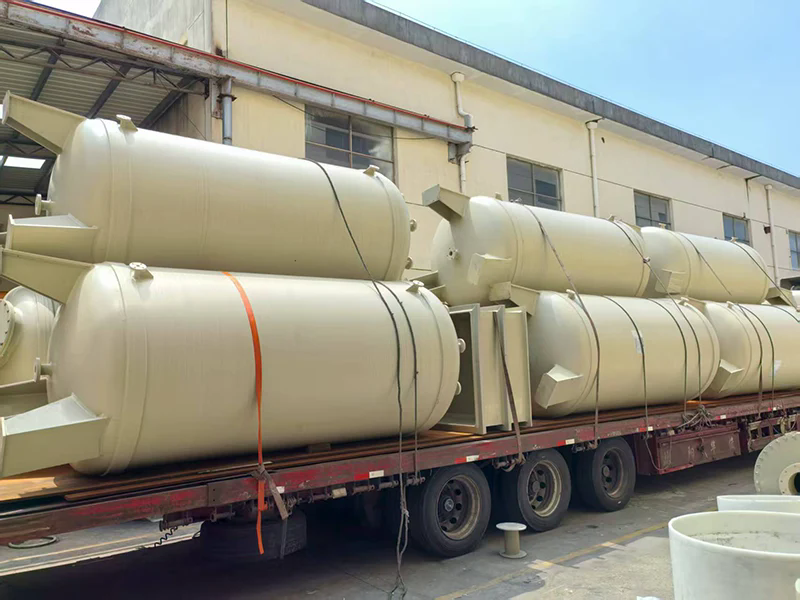
PPH Equipment Technical Parameters Overview
| Parameter Category | Typical Specifications |
|---|---|
| Material Type | Polypropylene Homopolymer (PPH) |
| Density | 0.90–0.91 g/cm³ |
| Operating Temperature Range | -20°C to +95°C (continuous) |
| Chemical Resistance Level | Strong resistance to acids, alkalis, salts, solvents |
| Thermal Conductivity | 0.22 W/m·K (approx.) |
| Tensile Strength | 28–36 MPa depending on grade |
| Flexural Strength | 30–40 MPa |
| Vicat Softening Point | 150–165°C |
| UV Resistance | Optional UV-stabilized grades available |
| Welding Options | Hot-melt welding, extrusion welding, butt fusion |
| Typical Product Forms | PPH tanks, PPH scrubbers, PPH pipes, PPH piping fittings, PPH sheets, PPH air systems |
These parameters are widely recognized across industries such as chemical processing, plating wastewater treatment, electrolysis, gas purification, pickling, pharmaceutical manufacturing, and semiconductor environments.
Why Does PPH Equipment Stand Out in Modern Industrial Applications?
Understanding the reasons behind the rising demand for PPH Equipment requires evaluating its material properties, operational efficiency, safety performance, and long-term cost advantages. Industrial users prioritize reliability and lifespan, especially when the environment involves chemical corrosion, high humidity, or contamination-sensitive processes.
Why Does Material Composition Matter?
PPH is recognized for its high crystallinity and uniform molecular structure, giving it:
-
Superior corrosion resistance against strong acids, alkalis, inorganic salts, and industrial exhaust gases
-
Low moisture absorption, making it extremely stable in humid conditions
-
High rigidity and structural strength, ideal for tanks, pipelines, and mechanical support systems
-
Excellent weldability for large-scale fabrication or on-site assembly
-
Lightweight properties, reducing installation costs and labor intensity
These characteristics significantly outperform traditional materials such as metal, FRP, and PVC in harsh environments.
Why Does Operational Reliability Improve With PPH Equipment?
PPH Equipment contributes to stable operations due to:
-
Uniform internal surfaces, which reduce scaling and chemical residue buildup
-
Predictable mechanical behavior, ensuring fewer unexpected failures
-
Low thermal expansion risk, allowing for stable performance during temperature fluctuations
-
Noise reduction capability, particularly in ventilation and exhaust systems
-
Electrical insulation, preventing risk in electrochemical processes
These performance advantages reduce downtime and increase operational efficiency, which is a core reason for its widespread adoption.
Why Is PPH Equipment More Cost-Efficient Long Term?
While the initial investment may be comparable to other engineering materials, long-term savings come from:
-
Extended equipment lifespan
-
Minimal corrosion-related maintenance
-
Decreased repair frequency
-
Energy-efficient material properties
Industries with corrosive processes particularly benefit from the reduced lifetime cost.
How Does PPH Equipment Function Across Diverse Industrial Environments?
PPH Equipment is engineered to perform in multi-stage industrial workflows, where reliability, cleanability, and resistance to chemical or thermal stress are mandatory. This section explains how PPH systems operate, how they fit into different industrial scenarios, and how their features can be applied to enhance system performance.
How Does PPH Improve Chemical Processing Systems?
In chemical storage and mixing, PPH excels due to:
-
Compatibility with aggressive chemicals, minimizing material degradation
-
Leak-proof welds, critical for high-risk environments
-
Smooth inner walls, reducing contamination in high-purity processes
-
Low reactivity, preventing unwanted chemical interactions
This makes PPH the material of choice for acid pickling lines, electroplating systems, and chemical rinsing facilities.
How Do PPH Exhaust Systems Enhance Environmental Protection?
PPH is widely used to manufacture scrubbers, exhaust ducts, and ventilation systems because:
-
It withstands acidic exhaust gases (HCl, HF, SO₂, NOx).
-
It does not corrode in constant moisture exposure.
-
It supports long-term airflow stability without structural fatigue.
-
It easily integrates with industrial fume treatment technologies.
As environmental standards rise globally, these features position PPH Equipment as a preferred solution.
How Does PPH Benefit Water and Wastewater Treatment?
PPH tanks, pipes, and filtration housings are effective in:
-
Electroplating wastewater systems
-
Desalination plants
-
RO/UF pretreatment units
-
Chemical dosing systems
PPH is durable and minimizes contamination risk, ensuring safer water quality.
How Does PPH Equipment Support Clean Production Applications?
Due to its non-toxic nature and minimal particle generation, PPH is ideal for:
-
Semiconductor fabrication
-
Battery manufacturing
-
Pharmaceutical and biotechnology facilities
-
High-purity chemical handling
Its clean performance reduces system downtime and contamination risk.
What Future Trends Will Shape the Development of PPH Equipment?
PPH Equipment has become increasingly relevant due to shifts in environmental regulations, production modernization, energy-saving goals, and automation integration. Understanding future trends helps industries plan ahead strategically.
Trend 1: Increased Demand for High-Purity Processing Materials
Industries like semiconductors, photovoltaics, hydrogen energy, and pharmaceuticals demand:
-
Ultra-pure processing environments
-
Corrosion-free piping
-
Stable handling of reactive chemicals
PPH Equipment fits these requirements and will continue its market expansion.
Trend 2: Growth in Environmental Protection Projects
Global regulatory developments point toward:
-
More chemical gas treatment systems
-
Expansion of wastewater processing plants
-
Higher standards for material durability in environmental equipment
PPH’s corrosion resistance and long lifespan align with future environmental policies.
Trend 3: Integration With Digital Monitoring Systems
PPH tanks and pipelines are increasingly integrated with:
-
Digital level sensors
-
Fluid temperature sensors
-
Smart flow control
-
IoT-based maintenance logs
The material’s stable thermoplastic nature allows easy modification and customization for smart industrial systems.
Trend 4: Expansion of Large-Scale Modular Fabrication
Factories increasingly choose modular PPH structures because:
-
On-site assembly time is reduced
-
Welding and forming are more uniform
-
Replacement and expansion are easier
-
Custom shapes can be produced efficiently
The modular direction will influence structural design standards across industries.
Trend 5: Sustainability and Lower Environmental Impact Materials
PPH supports sustainability goals due to:
-
Full recyclability
-
Long equipment lifespan
-
Reduced failure-related waste
-
Low environmental footprint during processing
This makes PPH Equipment attractive for companies pursuing green manufacturing commitments.
Common FAQs About PPH Equipment
Q1: What factors determine the lifespan of PPH Equipment in industrial applications?
A1: The lifespan is influenced by chemical concentration, exposure temperature, mechanical stress, weld quality, installation standards, and maintenance frequency. Under normal industrial conditions—with moderate temperatures and non-oxidizing chemicals—PPH Equipment can perform reliably for more than 15–20 years. Routine inspection of weld seams, flow conditions, and chemical compatibility further enhances longevity.
Q2: Can PPH Equipment be used in high-temperature chemical systems?
A2: PPH supports continuous working temperatures up to 95°C. In environments requiring heat beyond this range, reinforced grades or dual-layer structured designs are recommended. PPH's resistance to thermal deformation also ensures stable performance in systems where heating and cooling cycles occur frequently. It is essential to ensure proper expansion allowance and professional welding to maintain system integrity.
Conclusion: Why PPH Equipment Continues to Lead Industrial Material Innovation
PPH Equipment has established itself as a dependable, cost-efficient, and high-performance solution across chemical processing, wastewater treatment, environmental engineering, and high-purity industrial applications. Its material advantages—including durability, corrosion resistance, low contamination risk, weldability, and long-term stability—make it suitable for both traditional chemical plants and cutting-edge clean production environments.
As industrial standards continue evolving toward higher safety, cleaner environments, and smarter systems, PPH is expected to play a pivotal role in next-generation facility upgrades. The growing demand for corrosion-resistant equipment, modular fabrication technology, and sustainable materials ensures the continued relevance of PPH Equipment in global markets.
In industrial production, selecting reliable PPH Equipment suppliers is essential for achieving high system efficiency, long service life, and stable performance. Xinda Chemical continues to focus on delivering high-quality PPH materials and equipment that meet rigorous industrial and environmental requirements.
For professional consultation, system customization, or product cooperation, contact us to obtain tailored solutions for your specific application needs.
