

Why Is Temperature Stability Critical in a Gas Water Heater?
2026-09-30
A customer calls the service line and says the shower water goes from hot to cold and back again. The technician arrives, checks the Gas Water Heater, and finds that the outlet temperature is stable within 2 degrees when tested at the tap. The customer is not imagining the problem. The fluctuation occurs during the shower, when the pressure balance between hot and cold water changes, or when another fixture in the house is opened. Temperature stability is not just about the heater's ability to maintain a setpoint. It is about the heater's ability to respond to changes in flow rate, inlet temperature, and gas pressure without allowing the outlet temperature to drift outside the comfort range. This guide explains why stability matters and how to diagnose the causes of instability.
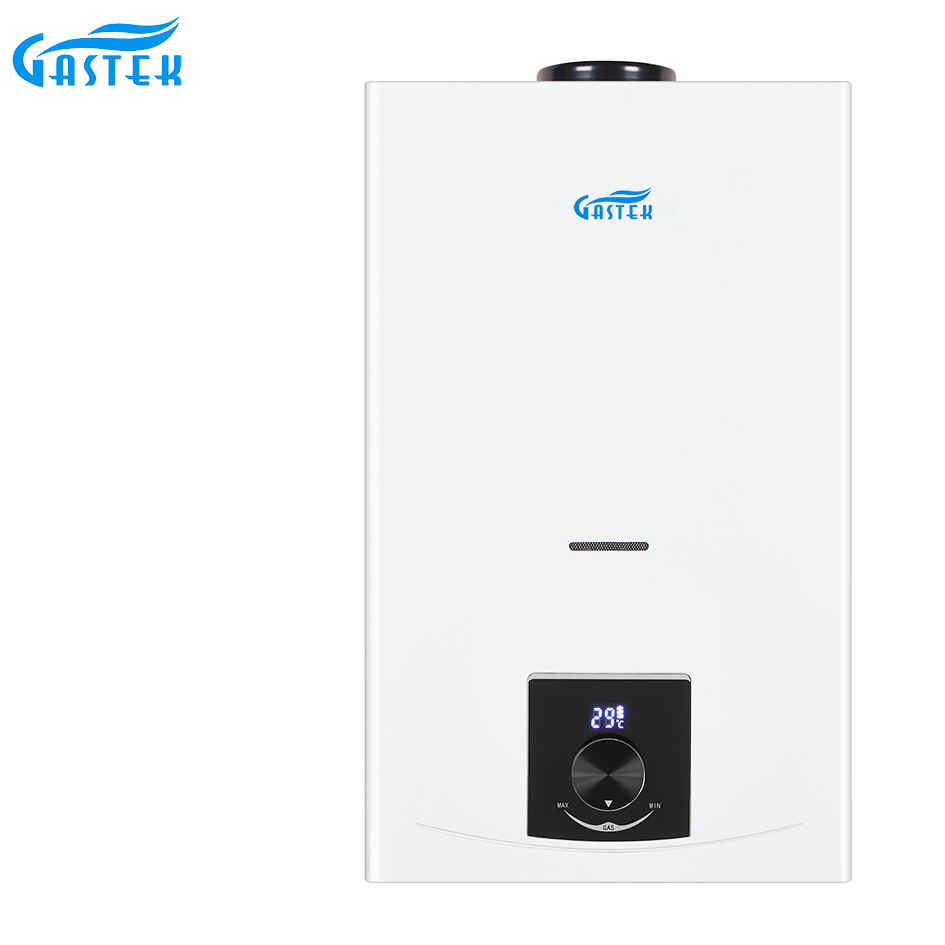
1. What Causes Temperature Fluctuation in a Gas Water Heater?
Temperature fluctuation has four primary causes. The first is water pressure variation. When a toilet is flushed or a washing machine is started, the cold water pressure drops. This reduces the flow rate through the Gas Water Heater, which causes the outlet temperature to rise. The second is gas pressure variation. If the gas supply pressure drops, the burner output decreases, and the outlet temperature falls. The third is heat exchanger scaling. Scale buildup on the heat exchanger reduces the heat transfer efficiency, which causes the outlet temperature to drop, especially at high flow rates. The fourth is a faulty thermostatic control. If the thermostat responds slowly or inaccurately, the outlet temperature will oscillate. The table below shows the typical temperature fluctuation for each cause.
| Cause | Typical temperature fluctuation | Pattern | Diagnostic method |
| Water pressure variation | ±5 to ±10°C | Fluctuation follows fixture use | Pressure gauge at inlet |
| Gas pressure variation | ±3 to ±8°C | Slow drift, not sudden | Manometer at gas inlet |
| Heat exchanger scaling | ±4 to ±12°C | Worse at high flow rate | Inspect heat exchanger |
| Thermostat fault | ±8 to ±15°C | Oscillation independent of flow | Test thermostat response |
In our factory, we test the temperature stability of every Gas Water Heater under simulated pressure and flow variations. The outlet temperature must remain within ±3°C of the setpoint when the flow rate varies from 5 to 15 liters per minute. Zhongshan Gastek Home Appliance Company Limited has been manufacturing gas water heaters for over 15 years and uses this test as a standard quality control step.
2. How Does Water Pressure Affect Outlet Temperature?
The outlet temperature of a Gas Water Heater is determined by the heat input and the water flow rate. If the heat input is constant and the flow rate decreases, the outlet temperature rises. If the flow rate increases, the outlet temperature falls. In a typical household, the flow rate through the shower can change by 30 to 50 percent when another fixture is opened. Without a mechanism to compensate for this change, the outlet temperature will fluctuate. The table below shows the relationship between flow rate and outlet temperature for a 20 kW heater with a constant heat input.
| Flow rate (L/min) | Inlet temperature (°C) | Heat input (kW) | Outlet temperature (°C) |
| 5 | 15 | 20 | 72 |
| 8 | 15 | 20 | 51 |
| 10 | 15 | 20 | 44 |
| 12 | 15 | 20 | 39 |
| 15 | 15 | 20 | 34 |
The table shows that a flow rate change from 10 to 8 liters per minute causes the outlet temperature to rise from 44°C to 51°C—a 7°C increase. This is enough to cause discomfort. To maintain a stable outlet temperature, the heater must modulate the heat input in response to the flow rate. This is the function of the modulating gas valve and the flow sensor. In our factory, we use a proportional control valve that adjusts the gas flow based on the water flow signal. The response time is less than 1 second.
3. How Does Heat Exchanger Scaling Affect Temperature Stability?
Scale is the enemy of temperature stability. In hard water areas, calcium and magnesium carbonate precipitate on the heat exchanger surface when the water is heated. The scale layer acts as an insulator, reducing the heat transfer coefficient. As the scale thickness increases, the outlet temperature drops for the same heat input. The heater may compensate by increasing the gas flow, but eventually the scale becomes so thick that the heater cannot maintain the setpoint at high flow rates. The table below shows the effect of scale thickness on heat transfer and outlet temperature.
| Scale thickness (mm) | Heat transfer coefficient (W/m²K) | Outlet temperature at 10 L/min (°C) | Temperature drop from new |
| 0 (new) | 5,000 | 45 | 0 |
| 0.5 | 3,500 | 42 | -3°C |
| 1.0 | 2,500 | 38 | -7°C |
| 1.5 | 1,800 | 34 | -11°C |
| 2.0 | 1,200 | 30 | -15°C |
In our factory, we recommend that the heat exchanger be inspected and descaled every 12 months in hard water areas. We also offer a scale inhibitor that can be installed on the inlet line. The inhibitor uses a food-grade polyphosphate that prevents the precipitation of calcium carbonate. This extends the descaling interval to 24 months.
4. How Should a Technician Diagnose Temperature Fluctuation?
The diagnostic process follows four steps. First, measure the inlet water pressure and the flow rate at the outlet. If the pressure is below 0.1 MPa or the flow rate is below 5 liters per minute, the fluctuation may be caused by insufficient supply. Second, measure the gas inlet pressure. If the pressure is below the specified minimum, the burner output will be reduced. Third, inspect the heat exchanger for scale. If the scale thickness exceeds 0.5 mm, descaling is required. Fourth, test the thermostat response. If the thermostat does not respond within 2 seconds to a change in flow rate, it should be replaced. The table below summarizes the diagnostic steps and the corrective actions.
| Diagnostic step | Normal reading | Corrective action |
| Inlet water pressure | > 0.15 MPa | Install a pressure booster if below |
| Flow rate at outlet | 8 – 15 L/min | Clean the inlet filter or adjust the valve |
| Gas inlet pressure | 2.0 – 3.5 kPa (natural gas) | Contact the gas supplier if below |
| Heat exchanger scale | < 0.2 mm | Descale with citric acid solution |
| Thermostat response time | < 2 seconds | Replace the thermostat |
Field tip: Before replacing any parts, always check the inlet filter. A partially clogged filter reduces the flow rate and causes the temperature to rise. Cleaning the filter takes 5 minutes and solves 20 percent of fluctuation complaints. In our factory, we provide a service manual with a flowchart that guides the technician through the diagnostic process step by step.
Frequently Asked Questions About Gas Water Heater Temperature Stability
Summary for Service Technicians and Homeowners
Temperature stability is critical in a Gas Water Heater because it determines the comfort and safety of the user. Fluctuation is caused by water pressure variation, gas pressure variation, heat exchanger scaling, or a faulty thermostat. The diagnostic process involves measuring the inlet pressure, flow rate, gas pressure, and heat exchanger condition. Most problems can be solved by cleaning the inlet filter, descaling the heat exchanger, or replacing the thermostat. For new installations, choose a heater with a fast modulating valve and a wide modulation range. Zhongshan Gastek Home Appliance Company Limited has been manufacturing Gas Water Heater units for over 15 years and provides full technical support for our customers.
Zhongshan Gastek Home Appliance Company Limited manufactures Gas Water Heater units with proportional modulating valves, wide modulation range, and scale-resistant heat exchangers. We provide service manuals and diagnostic tools for our products.
