

Why Is the High Voltage Earthing Switch a Game-Changer in Power Systems?
2025-10-13
In modern high-voltage power networks, the High Voltage Earthing Switch plays a pivotal role in ensuring safety, maintenance convenience, and system reliability. This article delves into the core functionalities, design parameters, operational rationale, implementation methods, and future trends. The central purpose is to guide engineers, asset managers, and decision-makers in selecting and deploying an optimal earthing switch solution.
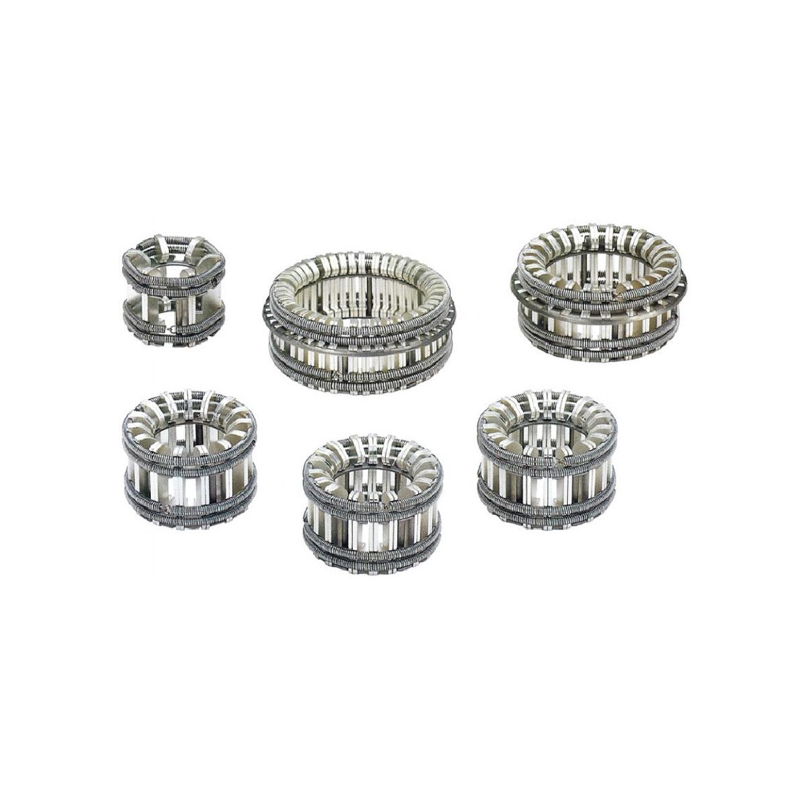
A High Voltage Earthing Switch (also called a HV grounding switch) is a device installed in high-voltage switchgear or substations to safely connect circuits or equipment to earth (ground) during maintenance, fault isolation, or emergency grounding scenarios. It provides a secure, low-impedance path to ground, eliminating residual voltages and protecting personnel and equipment.
Key Components and Working Principle
-
Fixed and movable contacts: to connect or disconnect the earthing path.
-
Drive mechanism: motor, pneumatic, or spring-loaded for reliable actuation.
-
Arc extinguishing chamber: to manage arc when closing under load or fault conditions.
-
Insulating frame or support: high dielectric strength structure to isolate in open position.
-
Interface with control and protection system: aux contacts, position feedback, interlocks.
Typical Performance Parameters
| Parameter | Typical Value / Range | Notes / Importance |
|---|---|---|
| Rated voltage | 72.5 kV to 800 kV (or higher) | Must match system voltage |
| Rated continuous current | 200 A to 2,000 A or more | For persistent ground fault conduction |
| Rated short-circuit making / breaking current | 20 kA to 63 kA (peak) | Withstand sudden fault currents |
| Mechanical life (operations) | ≥ 5,000 to 10,000 cycles | Longevity and reliability |
| Operating time | ≤ 1.5 – 3 seconds (opening/closing) | Fast action reduces risk |
| Insulation level (impulse withstand) | e.g. 1,650 kV (for 800 kV class) | Resist surges |
| Drive mechanism | Motor, spring, gas/pneumatic | Determines response consistency |
| Operating temperature range | –40 °C to +55 °C (or more) | Suitability for climatic extremes |
These parameters form the baseline specification that any serious high-voltage earthing switch must satisfy or exceed, depending on system demands.
Why Is a High Voltage Earthing Switch Critical? What Problems Does It Solve?
Ensuring Personnel and Equipment Safety
Without reliable earthing during maintenance, residual charge or induced voltage can pose lethal risk. A robust earthing switch ensures that the equipment is solidly grounded before any human access.
Facilitating Safe Maintenance and Switching
In substations, some operations require isolation and grounding of equipment before disconnection or reconnection. The earthing switch provides a safe path while upstream breakers are open, preventing floating potentials.
Enhancing Fault Isolation and System Protection
In case of system faults or sudden overvoltage events, the earthing switch helps quickly neutralize dangerous potentials, working in coordination with protection relays and breakers. It complements circuit breakers, not replacing them.
Reducing Downtime and Increasing System Reliability
Frequent switching, maintenance, and fault events require a device with high mechanical life, fast operation, and low failure rate. A high-performing earthing switch contributes to grid resiliency and reduced outage risk.
Regulatory and Compliance Requirements
Grid codes and safety standards often mandate verified earthing devices in high-voltage installations. Noncompliance can endanger system certification or liability insurance.
How Is a High Voltage Earthing Switch Designed, Selected, and Operated?
Selection Criteria and Steps
-
System voltage class and insulation coordination
Select a switch whose rated voltage and impulse withstand exceed system requirements. -
Load current capacity and fault current tolerance
Ensure the switch can carry continuous and short-term fault currents with margin. -
Operation speed and reliability
Choose mechanisms (spring, motor, pneumatic) that guarantee fast, repeatable switching. -
Control and interlocking integration
Include auxiliary contacts, position sensors and remote control logic to coordinate with SCADA/Protection. -
Mechanical durability and maintenance schedule
Select products with high cycle life and easy access for periodic inspection/lubrication. -
Environmental suitability and sealing
Ensure materials and design resist corrosion, pollution, humidity, temperature variation.
Installation Guidelines
-
Install close to the equipment to be grounded (busbars, transformer, reactors).
-
Provide proper earthing conductor size with low impedance path.
-
Include physical interlocks to prevent closing during live operation.
-
Commission with insulation test and mechanical operation tests.
-
Label status, provide position indication, and integrate with station control system.
Operational Procedures
-
Before maintenance: open upstream breaker → close earthing switch → verify continuity → proceed work.
-
After work completion: open earthing switch → verify isolation → close breaker → resume operation.
-
Under fault event: relay issues signal → earthing switch closes quickly → aids fault current discharge to ground.
Maintenance and Testing
-
Periodic mechanical operation cycles under no-load conditions (e.g. one full cycle every 6 to 12 months).
-
Contact surface inspection and cleaning.
-
Lubrication of moving parts.
-
Verification of contact resistance, insulation resistance, and auxiliary circuits.
-
Replacement of springs, seals, or drive components as needed.
What Will the Next Generation of High Voltage Earthing Switches Look Like?
Smart & IoT-Enabled Monitoring
Integration of sensors for vibration, temperature, contact wear, and position analytics will allow predictive maintenance and remote diagnostics.
Advanced Materials & Composite Insulators
Use of composite insulators and lightweight, high-strength alloys will improve performance in polluted or maritime environments.
Faster Switching Technolog ies
New drive systems (e-mechanics, magnetic actuators) aim to reduce operating time and enhance arc extinction, improving response to transient events.
Modular & Compact Designs
Compact earthing switch units for compact substation and modular grid expansion scenarios will save space and simplify retrofit.
Hybrid Grounding Systems with Solid-State Devices
Combined mechanical earthing switch plus solid-state grounding (using power electronics) for ultra-fast response and selective grounding functionality.
Standards & Interoperability
Global alignment of standards (IEC, IEEE) will drive more interchangeable and easier to certify earthing switch modules.
Common Questions about High Voltage Earthing Switch (FAQ)
Q: Can a High Voltage Earthing Switch be closed when the circuit is still energized?
A: No. The earthing switch is typically rated for zero or near‐zero load closing; closing under full load or live voltage may cause dangerous arcs and damage. Interlocks and protection logic must prevent that operation.
Q: How often should the earthing switch be tested and maintained?
A: It is advisable to operate the switch at least one cycle every 6 to 12 months under no load, and perform full inspections (contacts, insulation, drive) every 1 to 2 years depending on operating environment and cycles. Any anomalies (increase in contact resistance, corrosion) should be addressed immediately.
The High Voltage Earthing Switch is an indispensable component in high-voltage networks that ensures safety, simplifies maintenance, and supports fault management. From selecting the correct voltage and current rating to integrating into control systems, each step influences system reliability. Looking ahead, smart monitoring, advanced materials, and faster actuation will shape the next generation of earthing switches.
For top-tier, reliable, and high-performance solutions, Richge offers a portfolio of advanced High Voltage Earthing Switches engineered for demanding grid environments. To discuss custom design, specification matching, or system integration, contact us today.
