

Why Is the Piston Rod Critical in a Steering Hydraulic Cylinder?
2026-10-13
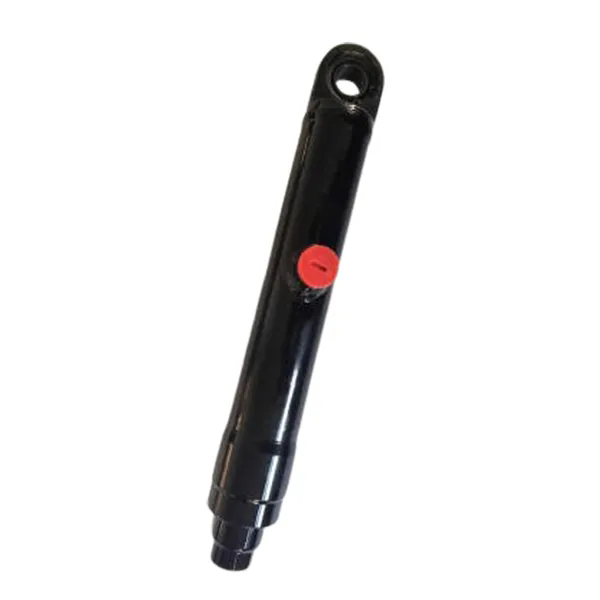
A warranty return arrives at our factory with a complaint of steering fluid leakage. The customer reports that the Steering Hydraulic Cylinder lost assist after 40,000 km. The service technician removed the cylinder and found fluid weeping from the rod seal. The rod surface shows a band of brown staining and pitting just outside the wiper seal. The chrome plating has flaked off in this area. The piston rod is not just a push rod. It is a precision ground, chrome plated, corrosion resistant surface that must maintain a sealing interface with the rod seal for the life of the vehicle. When the rod surface degrades, the seal cannot hold pressure, and the cylinder fails. This guide explains why the piston rod is the most critical component in a steering hydraulic cylinder.
1. What Failure Modes Affect the Piston Rod in Service?
The piston rod is exposed to the environment. It is coated with road salt, dust, and water. It is also subjected to side loads from the steering linkage. The combination of corrosion and mechanical stress causes four failure modes. The first is chrome flaking, which occurs when the plating bond is weak or the substrate is too soft. The second is pitting corrosion, which occurs when the chrome layer is penetrated by chloride ions. The third is wear, which occurs when abrasive particles are dragged across the rod surface by the seal. The fourth is bending, which occurs when the rod is subjected to excessive side load. The table below shows the failure modes and their typical causes.
| Failure mode | Visual appearance | Root cause | Typical mileage |
| Chrome flaking | Bright flakes; sharp edges | Poor adhesion; low substrate hardness | 30,000 – 60,000 km |
| Pitting corrosion | Brown or black spots; rough surface | Chrome porosity; road salt exposure | 50,000 – 100,000 km |
| Abrasive wear | Longitudinal scratches; polished bands | Dust ingress; hard particles in seal | 20,000 – 50,000 km |
| Bending | Rod runout; seal leakage on one side | Side load; misalignment | 10,000 – 30,000 km |
In our factory, we analyze returned Steering Hydraulic Cylinder units to identify the root cause of failure. Over 60 percent of the returned units show chrome flaking or pitting on the rod surface. The flaking is almost always caused by insufficient substrate hardness. If the steel beneath the chrome is too soft, it deforms under load, and the chrome cracks and flakes. Raydafon Technology Group Co.,Limited has been manufacturing Steering Hydraulic Cylinder units for over 20 years and has developed a hardening process that eliminates this failure mode.
2. How Does Substrate Hardness Affect Chrome Adhesion and Life?
The chrome plating is only as good as the steel beneath it. If the substrate is soft, it cannot support the chrome layer under load. The chrome cracks, and moisture penetrates the crack, causing corrosion of the substrate. The corrosion products expand and lift the chrome, causing flaking. The substrate hardness must be at least 45 HRC to support the chrome layer in a steering application. The table below shows the relationship between substrate hardness and chrome life.
| Substrate hardness (HRC) | Chrome adhesion | Chrome life (km) | Failure mode |
| 25 – 30 | Poor | 20,000 – 40,000 | Flaking |
| 35 – 40 | Moderate | 50,000 – 80,000 | Pitting |
| 45 – 50 | Good | 100,000 – 150,000 | Wear |
| 55 – 60 | Excellent | 200,000 – 300,000 | No failure |
In our factory, we use induction hardening to achieve a substrate hardness of 55 to 60 HRC on the piston rod. The hardening depth is 1.5 to 2.5 mm. This provides a hard, stable base for the chrome plating. We then grind the rod to a surface finish of Ra 0.2 to 0.4 microns and apply a hard chrome layer with a thickness of 20 to 30 microns. The chrome hardness is 800 to 1,000 HV. Raydafon Technology Group Co.,Limited has validated this process through 500,000 km of field testing.
3. How Does the Wiper Seal Protect the Piston Rod?
The wiper seal is the first line of defense for the piston rod. It is located at the outer end of the cylinder and wipes the rod as it retracts. The wiper removes dust, mud, and water before they can reach the rod seal. If the wiper is worn or damaged, contaminants reach the rod seal and cause abrasive wear. The table below shows the effect of wiper condition on rod wear.
| Wiper condition | Contaminant ingress | Rod wear rate | Seal life |
| New, flexible lip | None | Baseline | 100,000 km |
| Worn lip (50% thickness) | Moderate | 3x baseline | 50,000 km |
| Hardened lip | High | 8x baseline | 20,000 km |
| Missing wiper | Severe | 15x baseline | 10,000 km |
Field observation: In our failure analysis lab, we have seen rods that failed at 30,000 km because the wiper was damaged during installation. The wiper lip was folded back, which allowed dust to bypass the seal. The rod surface showed severe abrasive wear in the area where the wiper should have been wiping. This is a preventable failure. We recommend that the wiper be lubricated with silicone grease before installation and that the rod be protected during assembly.
4. How Does Rod Alignment Affect Seal and Rod Life?
The piston rod must be aligned with the cylinder bore and the rod seal. If the rod is misaligned, the seal is compressed on one side and stretched on the other. This causes uneven wear and leakage. Misalignment also creates a side load on the rod, which can cause bending and chrome flaking. The table below shows the effect of misalignment on rod and seal life.
| Rod misalignment (mm) | Seal compression variation | Rod side load (N) | Expected life |
| 0 – 0.05 | < 5% | < 50 | 100,000 km |
| 0.05 – 0.10 | 10 – 20% | 100 – 200 | 60,000 km |
| 0.10 – 0.20 | 20 – 40% | 200 – 400 | 30,000 km |
| > 0.20 | > 40% | > 400 | < 15,000 km |
In our factory, we measure the rod runout on every Steering Hydraulic Cylinder before shipment. The runout must be less than 0.05 mm over the full stroke. We also recommend that the installer check the alignment of the cylinder with the steering linkage. If the cylinder is mounted with a misalignment of more than 0.1 mm, the rod will be subjected to a side load that accelerates wear. Raydafon Technology Group Co.,Limited provides an alignment guide and a mounting kit with every cylinder.
Frequently Asked Questions About Piston Rod Durability in Steering Hydraulic Cylinders
Summary for Designers and Maintenance Engineers
The piston rod is the most critical component in a Steering Hydraulic Cylinder because it must maintain a sealing interface with the rod seal while being exposed to the environment. The rod fails by chrome flaking, pitting, wear, or bending. The key to long life is a hard substrate (55 to 60 HRC), a dense chrome layer (20 to 30 microns), a flexible wiper seal, and proper alignment. By controlling these factors, the rod can last 200,000 km or more. Raydafon Technology Group Co.,Limited has been manufacturing Steering Hydraulic Cylinder units for over 20 years and provides full failure analysis support for our customers.
Raydafon Technology Group Co.,Limited manufactures Steering Hydraulic Cylinder piston rods with induction-hardened substrates (55 to 60 HRC), hard chrome plating (20 to 30 microns), and precision grinding to Ra 0.2 microns. We provide hardness certificates, chrome thickness reports, and alignment guides for all of our products.
