

Why Is the Supersonic Spraying System Transforming High-Precision Surface Engineering?
2025-12-04
The Supersonic Spraying System has emerged as a next-generation solution for industries demanding extreme precision, durability, and material performance. Built on the principle of accelerating particles to supersonic velocities, this technology creates ultra-dense coatings that bond mechanically without melting — preserving material properties, preventing thermal distortion, and extending component life.
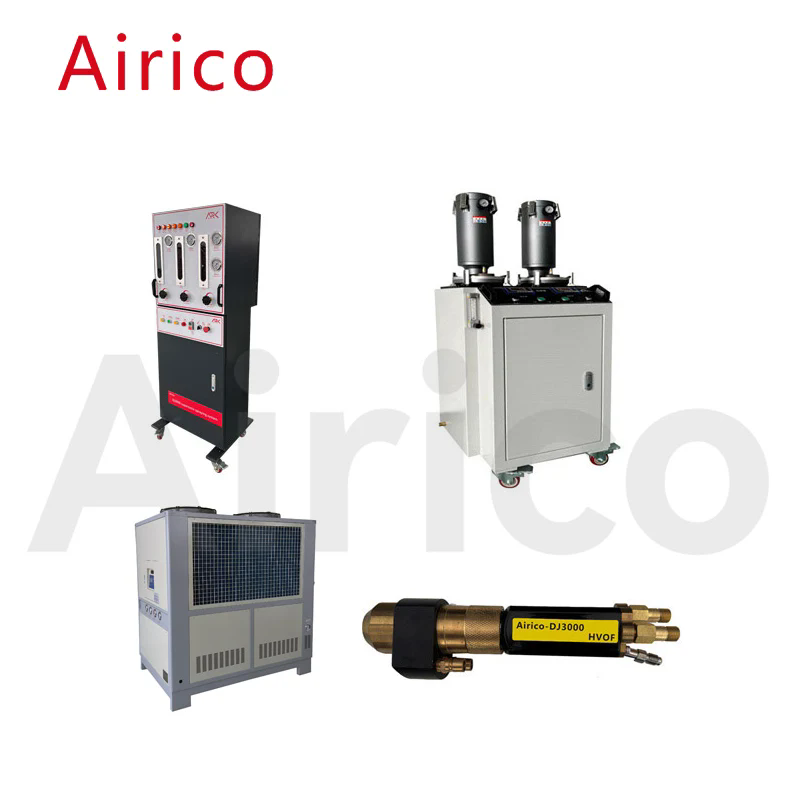
A high-quality Supersonic Spraying System relies on carefully engineered structural, thermal, and kinetic components. The following parameter table summarizes the core specifications typically requested by engineers and procurement teams:
| Parameter | Specification Range / Description |
|---|---|
| Particle Velocity | 600–1200 m/s depending on nozzle & gas configuration |
| Gas Temperature | 300–750°C (low-temperature kinetic deposition, no melting) |
| Nozzle Type | Laval-type supersonic nozzle |
| Powder Feeding Rate | 5–50 g/min adjustable |
| Compatible Materials | Aluminum, copper, titanium, Inconel, stainless steel, composites, ceramics |
| Coating Thickness | 20–5000 μm depending on application |
| Adhesion Strength | >70 MPa (material-dependent) |
| Surface Roughness After Spraying | Ra 0.8–3.0 μm |
| System Control | Digital PLC with real-time monitoring |
| Operation Mode | Semi-automatic / fully programmable |
| Power Supply | 220V/380V industrial configuration |
| Safety Features | Multilevel temperature and pressure protection, automatic shutdown system |
These parameters define performance in environments where coating density, uniformity, and material integrity directly impact safety and function.
How Supersonic Kinetic Deposition Works
The system injects powder particles into a high-pressure, high-velocity airflow produced by compressive gas expansion through a Laval nozzle. When these particles strike the substrate at supersonic velocities, they deform plastically and form a strong mechanical bond. No melting occurs, which prevents oxidation, grain growth, and thermal degradation.
Why Industries Prefer Supersonic Spraying
-
No Thermal Damage
Since coating occurs below melting point, substrate distortion is avoided — crucial for aerospace housings, thin-wall parts, and electronic components. -
High-Density, High-Strength Coatings
Impact bonding forms compact layers that enhance wear resistance, fatigue performance, and corrosion protection. -
Material Versatility
Metals, metal-matrix composites, and certain ceramics can be applied with minimal preparation and controlled roughness. -
Reduced Porosity & Longer Component Life
Coatings exhibit low porosity (<1%), improving structural stability in extreme conditions. -
Efficient Production With Low Waste
Most powder is efficiently deposited; overspray is minimized, lowering consumable costs. -
Environmentally Friendly Process
The system does not generate hazardous fumes typical of thermal spray methods.
Key Performance Highlights
-
Superior for repairing high-value components such as turbine blades, shafts, and molds.
-
Enables additive manufacturing applications, including near-net-shape part building.
-
Supports non-conductive coatings and galvanic corrosion prevention.
This combination of efficiency, versatility, and reliability explains the rapid adoption of the technology in advanced manufacturing facilities.
Integration With Automation & Robotics
Robotic arms combined with supersonic spraying equipment ensure maximal consistency across complex geometries. Manufacturers increasingly adopt fully automated solutions for batch stability and continuous operation.
Rise of Cold-Spray Additive Manufacturing (CSAM)
Industries are turning to supersonic technology as a metal 3D-printing alternative, especially for:
-
structural repairs,
-
near-net part reconstruction,
-
multi-material layering.
The low-heat nature allows engineers to build stronger, crack-free structures.
Expansion Into Lightweight Alloy Coatings
Aerospace and EV industries demand coatings for magnesium, titanium, and aluminum that resist corrosion without overheating the base material. Supersonic spraying fulfills these needs effectively.
Digital Monitoring & Predictive Control
Next-generation controllers track:
-
gas temperature,
-
velocity distribution,
-
powder flow uniformity,
-
coating deposition rate,
enabling highly stable processes with minimal human intervention.
Green Manufacturing
Because the process eliminates high-temperature emissions and harmful chemical byproducts, it aligns with global sustainability standards.
The future points toward more compact systems, broader material compatibility, and deeper integration into automated production lines.
What Are the Most Common Questions About Supersonic Spraying Systems?
Q1: How does a Supersonic Spraying System achieve strong bonding without melting the coating material?
A: The system accelerates powder particles to supersonic speeds using high-pressure gas expansion. When these particles collide with the substrate, they undergo intense plastic deformation, allowing them to mechanically interlock with surface micro-structures. Since the particles do not melt, the substrate avoids thermally induced deformation, oxidation, or microstructural changes. This creates a dense, durable coating with outstanding adhesion.
Q2: How is the coating thickness controlled during operation?
A: Coating thickness is regulated by adjusting parameters such as powder feed rate, spray distance, traverse speed, and gas pressure. Digital controllers provide real-time feedback, allowing operators to fine-tune deposition rates. This ensures consistency from thin functional coatings to thick structural layers required for wear resistance or part reconstruction.
How Can Businesses Implement Supersonic Spraying Systems to Enhance Manufacturing Reliability?
High-precision industries increasingly depend on the Supersonic Spraying System to address challenges such as thermal distortion, rapid wear, corrosion, and complex component repairs. With high particle velocity, strong bonding capability, and compatibility with difficult-to-coat materials, the technology provides a long-term, cost-effective solution for maintaining equipment, improving durability, and supporting sustainable production practices.
For companies seeking advanced surface engineering solutions, the technology offers stability, scalability, and proven industrial performance. Manufacturers benefit from the system’s efficiency, reduced waste, and strong return on investment, especially when used for high-value components or continuous production lines.
Suzhou Airico Machinery Equipment Co., Ltd. provides customized Supersonic Spraying Systems engineered for professional industrial use. To learn more about specifications, application support, or integration options, contact us for detailed consultation and technical guidance.
