

Why Is Tool Selection Critical for Successful Aerospace Machining
2026-01-22
In the high-stakes world of aerospace machining, where a single component failure is not an option, success hinges on precision, reliability, and uncompromising quality. Every decision in the manufacturing process carries immense weight, and none is more foundational than tool selection. At BSD, we understand that the right cutting tool is not merely a consumable; it is the pivotal interface between engineering design and physical reality. Choosing incorrectly can lead to catastrophic part rejection, soaring costs, and dangerous compromises in integrity. This blog explores why meticulous tool selection is the non-negotiable cornerstone of effective Aerospace Machining.
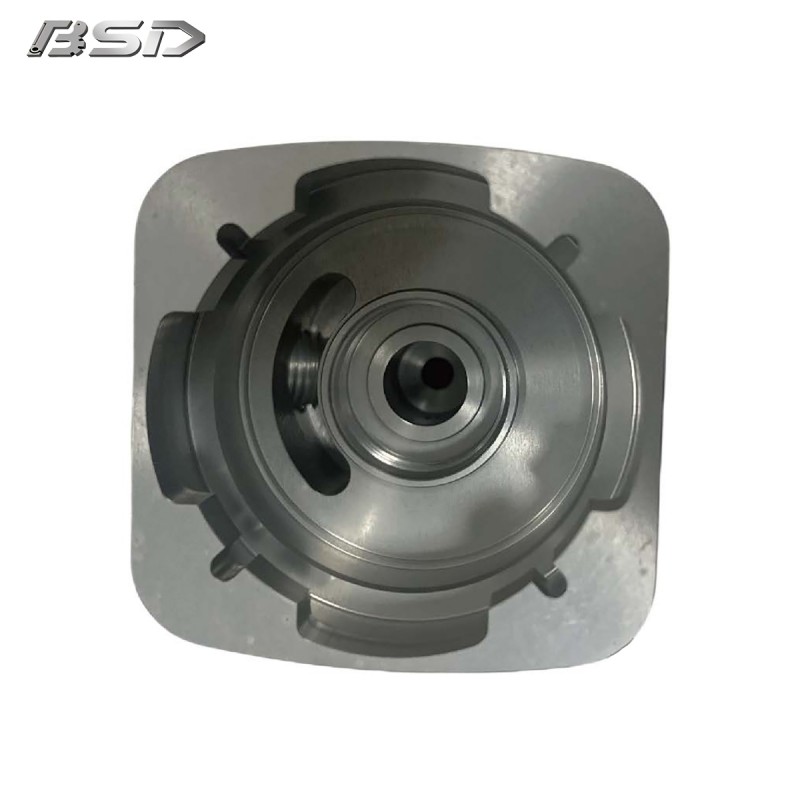
Selecting the optimal tool involves navigating a complex matrix of requirements. The wrong choice directly impacts:
-
Part Integrity: Induced stresses, micro-fractures, or poor surface finishes can create hidden failure points.
-
Geometric Accuracy: Inability to hold extreme tolerances results in non-conforming parts.
-
Economic Viability: Rapid tool wear, breakage, and slow machining rates destroy profitability.
-
Material Challenges: Aerospace alloys like Inconel, titanium, and high-strength composites demand specific tool geometries and coatings.
The following table outlines key tool property considerations for common aerospace materials:
| Material Challenge | Tool Property Priority | BSD Solution Focus |
|---|---|---|
| Heat-Resistant Alloys (e.g., Inconel) | High hot hardness, wear-resistant coating, positive rake geometry | Specialized carbide grades with advanced AlTiN coatings |
| Titanium Alloys | Sharp cutting edge, high rigidity, efficient heat dissipation | Robust tool design with high-pressure coolant channels |
| Carbon Fiber Composites (CFRP) | Abrasion resistance, specialized edge preparation to minimize delamination | Diamond-coated tools or polycrystalline diamond (PCD) cutters |
Aerospace Machining FAQ
What are the most critical factors when choosing a tool for aerospace parts
The paramount factors are the workpiece material, the required tolerance and surface finish, and the specific machining operation (e.g., roughing vs. finishing). The tool must manage heat effectively, resist wear, and provide unchanging stability.
How does tool geometry affect the machining of aerospace components
Tool geometry directly controls chip formation, cutting forces, and heat generation. A correct geometry ensures efficient chip evacuation, reduces stress on the part, and minimizes deflection, which is essential for maintaining tight tolerances and perfect surface integrity in Aerospace Machining.
Why are specialized coatings so important on aerospace machining tools
Coatings like AlTiN, TiSiN, or diamond layer drastically increase surface hardness, reduce friction, and provide a thermal barrier. This extends tool life significantly, allows for higher machining parameters, and protects the substrate from the extreme heat generated when cutting tough alloys.
In conclusion, tool selection is a fundamental engineering decision that dictates the safety, performance, and cost-effectiveness of the entire Aerospace Machining process. It requires deep expertise in metallurgy, mechanics, and practical application. At BSD, we provide more than just cutting tools; we offer engineered solutions backed by technical support to ensure your mission-critical projects meet their rigorous specifications. Don't let inferior tooling ground your potential.
Contact us today to speak with a BSD engineering specialist and let us help you select the perfect tools for your most challenging aerospace components.
