

Why Oval and Octagonal Profiles Are Both Available in Ring Joint Gaskets?
2026-10-08
A maintenance crew is replacing a leaking Ring Joint Gaskets on a high-pressure gas line. The warehouse sends an octagonal gasket. The crew installs it, but the flange will not close properly. The gap between the flange faces is 3 mm too wide. The crew checks the groove and realizes the flange was designed for an oval gasket. The octagonal gasket is too tall for the groove. This is a common mistake in the field. Oval and octagonal profiles are both standard for Ring Joint Gaskets, but they are not interchangeable in all flanges. The choice depends on the groove depth, the flange standard, and the sealing requirements. This guide explains the differences and how to identify the correct profile during maintenance.
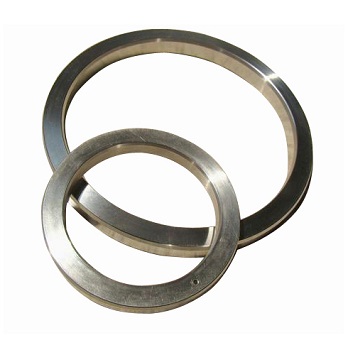
1. What Is the Geometric Difference Between Oval and Octagonal Profiles?
The oval profile has a rounded cross-section. It contacts the groove along a curved line. The octagonal profile has a flat, angled cross-section. It contacts the groove along two flat surfaces. The height of the octagonal profile is greater than the oval profile. This means that the octagonal gasket sits higher in the groove and requires a deeper groove to accommodate it. The table below compares the geometric dimensions of the two profiles for a standard R-type gasket.
| Parameter | Oval profile | Octagonal profile |
| Cross-section shape | Rounded (elliptical) | Flat, angled faces |
| Contact with groove | Line contact (curved) | Two flat surfaces |
| Height (for R-24 gasket) | 12.7 mm | 14.3 mm |
| Width (for R-24 gasket) | 17.5 mm | 17.5 mm |
| Groove depth required | Standard | 0.8 – 1.2 mm deeper |
In our factory, we manufacture Ring Joint Gaskets in both profiles. The oval profile is produced by turning on a CNC lathe. The octagonal profile is produced by milling or grinding the angled faces. The dimensional tolerances are critical because the gasket must fit the groove without excessive clearance or interference. Ningbo Kaxite Sealing Materials Co., Ltd. verifies the dimensions of every batch with a coordinate measuring machine.
2. How Does the Profile Affect Sealing Contact and Leakage?
The sealing mechanism is different for each profile. The oval gasket seals by line contact. The curved surface concentrates the contact stress along a narrow band. This provides a high sealing pressure with a relatively low bolt load. The octagonal gasket seals by two flat surfaces. The contact area is larger, so the sealing pressure is lower for the same bolt load. However, the octagonal profile is more stable because the flat surfaces resist rotation and movement during installation. The table below compares the sealing performance of the two profiles.
| Sealing parameter | Oval profile | Octagonal profile |
| Contact type | Line contact | Surface contact |
| Contact stress | High (concentrated) | Moderate (distributed) |
| Bolt load required | Lower | Higher |
| Resistance to rotation | Low | High |
| Reusability | Limited | Better (if not deformed) |
| Leak rate (helium) | < 10⁻⁶ mbar·L/s | < 10⁻⁶ mbar·L/s |
Both profiles can achieve the same leak rate when properly installed. The choice depends on the flange groove and the installation conditions. The oval profile is more forgiving if the flange faces are slightly misaligned because the line contact can accommodate small variations. The octagonal profile is more resistant to vibration and thermal cycling because the flat surfaces maintain contact even if the bolt load relaxes slightly.
3. How Do You Identify the Correct Profile in the Field?
The profile is determined by the flange groove. The groove for an oval gasket has a rounded bottom. The groove for an octagonal gasket has a flat, angled bottom. The difference is visible if you inspect the groove with a flashlight. The table below shows the groove dimensions for the two profiles for a standard R-24 gasket.
| Groove parameter | Oval groove | Octagonal groove |
| Groove depth | 8.0 mm | 9.0 mm |
| Groove width | 19.0 mm | 19.0 mm |
| Bottom shape | Rounded (radius 1.5 mm) | Flat with 23° angle |
| Gasket height above groove | 4.7 mm | 5.3 mm |
Field identification tip: If the groove has a rounded bottom, use an oval gasket. If the groove has a flat, angled bottom, use an octagonal gasket. If you are unsure, measure the groove depth. A groove depth of 8.0 mm is for oval; 9.0 mm is for octagonal. Never force an octagonal gasket into an oval groove. The flange will not close properly, and the gasket will not seal.
In our factory, we provide a groove identification gauge with every Ring Joint Gaskets order. The gauge is a simple metal plate with two profiles that match the oval and octagonal grooves. The maintenance crew can insert the gauge into the groove to determine which profile is required. Ningbo Kaxite Sealing Materials Co., Ltd. also provides a pocket-sized reference card that shows the groove dimensions for common gasket sizes.
4. When Should You Choose One Profile Over the Other?
The choice between oval and octagonal is usually determined by the flange standard, not by the user. API 6B flanges can accept either oval or octagonal gaskets, depending on the groove that was machined. API 6BX flanges require a different gasket style entirely (BX). For new installations, the octagonal profile is more common because it is more stable during installation and provides better resistance to vibration. For existing installations, the profile is already determined by the groove. The table below shows the typical applications for each profile.
| Application | Recommended profile | Reason |
| New high-pressure gas lines | Octagonal | Better stability and vibration resistance |
| Existing low-pressure lines | Oval (if groove is oval) | Groove determines profile |
| Flanges with minor misalignment | Oval | Line contact accommodates misalignment |
| Flanges subject to thermal cycling | Octagonal | Flat contact maintains seal |
| Emergency replacement | Match existing groove | Never mix profiles |
In our factory, we have seen cases where a maintenance crew tried to use an oval gasket in an octagonal groove. The gasket sat too low in the groove, and the flange faces did not contact the gasket properly. The joint leaked immediately. We have also seen the opposite: an octagonal gasket in an oval groove. The flange would not close, and the bolts could not be tightened to the required torque. Both situations are avoidable if the groove is identified before the gasket is ordered.
Frequently Asked Questions About Oval and Octagonal Ring Joint Gaskets
Summary for Field Engineers and Maintenance Planners
Oval and octagonal profiles are both available for Ring Joint Gaskets because they serve different flange groove designs and sealing requirements. The oval profile provides line contact and is more forgiving of misalignment. The octagonal profile provides surface contact and is more stable under vibration and thermal cycling. The profiles are not interchangeable. The correct profile is determined by the groove in the flange. By identifying the groove before ordering, maintenance crews can avoid installation problems and ensure a leak-tight joint. Ningbo Kaxite Sealing Materials Co., Ltd. has been manufacturing Ring Joint Gaskets for over 18 years and supplies to oil and gas projects worldwide.
Ningbo Kaxite Sealing Materials Co., Ltd. manufactures oval and octagonal Ring Joint Gaskets in a full range of sizes and materials. We provide groove identification gauges, dimensional inspection reports, and material certificates for all of our products.
