

Why Proper Storage Extends the Lifespan of Concrete Block Molds?
2026-03-13
In modern concrete product manufacturing, production efficiency and mold longevity are closely connected. Many block producers focus heavily on machine performance and raw material quality, yet overlook an equally important factor: storage conditions. Improper storage often leads to corrosion, deformation, dimensional inaccuracy, and shortened service life of molds used in block production lines.
For manufacturers operating in North America, Europe, and other developed construction markets, maintaining production stability is essential. Contractors expect consistent block dimensions, smooth surfaces, and reliable supply. When storage practices are ignored, molds degrade faster, affecting both product quality and production costs. This is why the correct handling and storage of a Mould/Mold for Concrete Block becomes a fundamental part of plant management.
At Quangong Machinery Co., Ltd., years of experience working with international concrete equipment users have shown that many mold failures are not caused by design flaws but by improper storage after production cycles. Our engineering team regularly advises customers that preventive care and organized storage can extend mold lifespan significantly while maintaining precision tolerances.
In large block factories, molds may remain unused during seasonal demand fluctuations. During these periods, humidity, dust, and temperature variation can affect metal surfaces and structural alignment. When a Mould/Mold for Concrete Block is stored correctly, corrosion risk decreases and operational accuracy remains stable when production resumes.
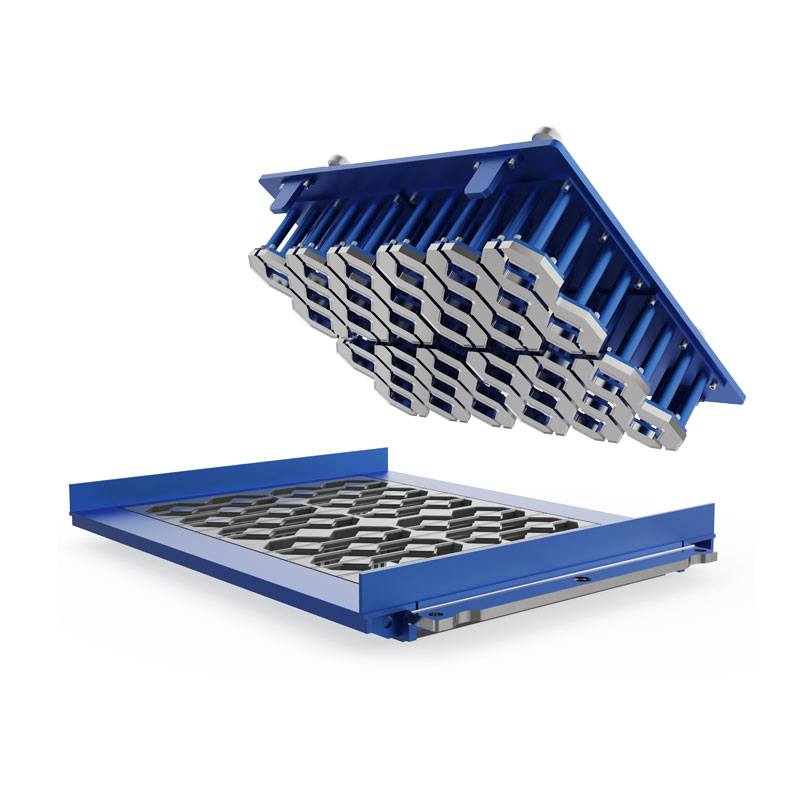
How Do Environmental Conditions Affect Mold Performance Over Time?
Environmental control plays a critical role in preserving mold structure. Concrete molds are typically made from high strength alloy steel or treated steel plates designed to withstand vibration and pressure during block formation. However, exposure to uncontrolled humidity and temperature variation can gradually weaken protective coatings.
In industrial plants across Europe and the United States, recommended storage environments usually include dry warehouses, controlled humidity levels, and stable temperatures. These conditions prevent oxidation and ensure that mechanical tolerances remain intact. Our factory regularly reminds clients that long term storage should always include anti rust oil and protective covers to maintain surface integrity.
The following table outlines common environmental factors and their impact on mold longevity in concrete block production facilities.
| Environmental Factor | Typical Industrial Standard | Impact on Mold Durability |
| Humidity Level | Below 60 percent relative humidity | Prevents corrosion and oxidation on steel surfaces |
| Storage Temperature | 10 to 30 degrees Celsius | Maintains structural stability and prevents expansion stress |
| Dust Exposure | Minimal airborne particles | Protects precision edges and vibration surfaces |
| Protective Coating | Anti rust oil or industrial grease | Reduces metal surface degradation |
When these environmental standards are maintained, a Mould/Mold for Concrete Block can maintain consistent performance for many production cycles. Proper storage protects welding joints, shaping cavities, and internal reinforcement structures that are essential for producing high quality blocks.
Why Should Mold Cleaning and Protective Coating Be Part of Storage Procedures?
Cleaning is often underestimated in mold maintenance. After each production run, concrete residue, cement slurry, and fine aggregates can remain attached to the mold cavity surfaces. If these residues are left untreated before storage, they may harden and cause abrasion during the next production cycle.
Industrial plants typically implement a simple but effective cleaning process before placing molds into storage. First, compressed air or soft brushes remove loose particles. Second, mild industrial cleaning agents dissolve cement residue. Finally, protective oil is applied to the steel surface to prevent oxidation.
Our factory encourages customers to adopt structured cleaning routines, particularly when storing molds for extended periods. Consistent cleaning protects the dimensional accuracy of cavities and ensures that the Mould/Mold for Concrete Block maintains its forming precision. This process also reduces downtime when molds are reintroduced into the production line.
How Do Structural Design and Material Quality Support Long Term Storage?
The durability of molds is not determined only by storage methods. Structural engineering and material selection also influence how well molds withstand long term storage conditions. High quality steel alloys, reinforced frames, and precision machining improve resistance to environmental stress.
Quangong Machinery Co., Ltd. integrates advanced machining technology and strict quality inspection processes during mold manufacturing. Our engineering team carefully designs each mold structure to resist vibration fatigue and mechanical wear during high volume block production.
The following table provides an overview of common technical specifications used in modern concrete block mold manufacturing.
| Specification Category | Typical Parameter | Industrial Benefit |
| Steel Material | High strength alloy steel | Improves durability and wear resistance |
| Surface Treatment | Heat treatment and polishing | Enhances corrosion resistance and cavity smoothness |
| Machining Precision | High tolerance CNC processing | Ensures consistent block dimensions |
| Structural Reinforcement | Multi point welded frame structure | Maintains stability under vibration pressure |
When manufacturers combine proper storage practices with high quality materials, the operational lifespan of a Mould/Mold for Concrete Block can increase substantially. This reduces replacement frequency and improves overall production profitability.
Why Do Professional Storage Systems Reduce Long Term Production Costs?
From a financial perspective, mold replacement is one of the recurring operational costs in concrete block manufacturing. A poorly stored mold may experience corrosion, deformation, or surface wear that reduces block accuracy and leads to defective products.
Our experience working with global block producers shows that organized storage racks, protective packaging, and scheduled inspections help maintain mold quality. When storage areas are clearly labeled and molds are placed on dedicated racks rather than directly on concrete floors, structural damage is minimized.
Quangong Machinery Co., Ltd. frequently supports international clients by providing storage recommendations alongside equipment installation guidance. These measures ensure that each Mould/Mold for Concrete Block remains ready for production even after long idle periods.
FAQ
Q1: Why Proper Storage Extends the Lifespan of Concrete Block Molds?
Proper storage protects molds from environmental damage such as corrosion, humidity exposure, and structural stress. When molds are stored in dry and controlled environments with protective coatings, metal surfaces remain stable and precision cavities maintain their shape. This ensures consistent block quality and reduces the need for frequent mold replacement.
Q2: Why Proper Storage Extends the Lifespan of Concrete Block Molds in seasonal production plants?
Many block factories experience seasonal demand fluctuations. During idle periods, molds may remain unused for several weeks or months. Without protective storage, moisture and dust can accumulate on mold surfaces and cause oxidation. Organized storage with protective oil and controlled temperature prevents these issues and allows molds to return to operation without performance loss.
Q3: Why Proper Storage Extends the Lifespan of Concrete Block Molds when combined with regular maintenance?
Storage alone cannot guarantee mold durability if maintenance is neglected. Cleaning molds before storage removes hardened cement residues that could damage cavity surfaces. Applying anti corrosion oil and inspecting structural welds ensures that molds remain in optimal condition. When storage and maintenance are combined, mold lifespan and production reliability improve significantly.
Proper storage is a strategic investment for any concrete product manufacturer. By maintaining controlled environments, implementing cleaning routines, and choosing reliable manufacturing partners such as Quangong Machinery Co., Ltd., producers can protect equipment assets and maintain consistent product quality. If you are looking for durable mold solutions or technical guidance from our factory, our team welcomes your inquiry and is ready to help you improve production efficiency and long term equipment performance.
