

Why QGM Block Making Machine Is a Key Trend in the Global Construction Industry?
2026-10-23
An international contractor is preparing a bid for a 5,000-unit housing project in East Africa. The original plan is to ship precast concrete blocks from a factory in Asia. The logistics analysis shows that the freight cost for 120,000 cubic meters of blocks is $4.2 million, and the breakage rate during sea transport and inland trucking is 8 percent. The contractor considers an alternative: install a QGM Block Making Machine at the project site and produce the blocks locally using local sand, cement, and water. The equipment cost is $850,000, and the production can start within 90 days of order. The contractor calculates that the localized production saves $2.8 million compared to importing finished blocks. This is why the QGM Block Making Machine has become a key trend in the global construction industry.
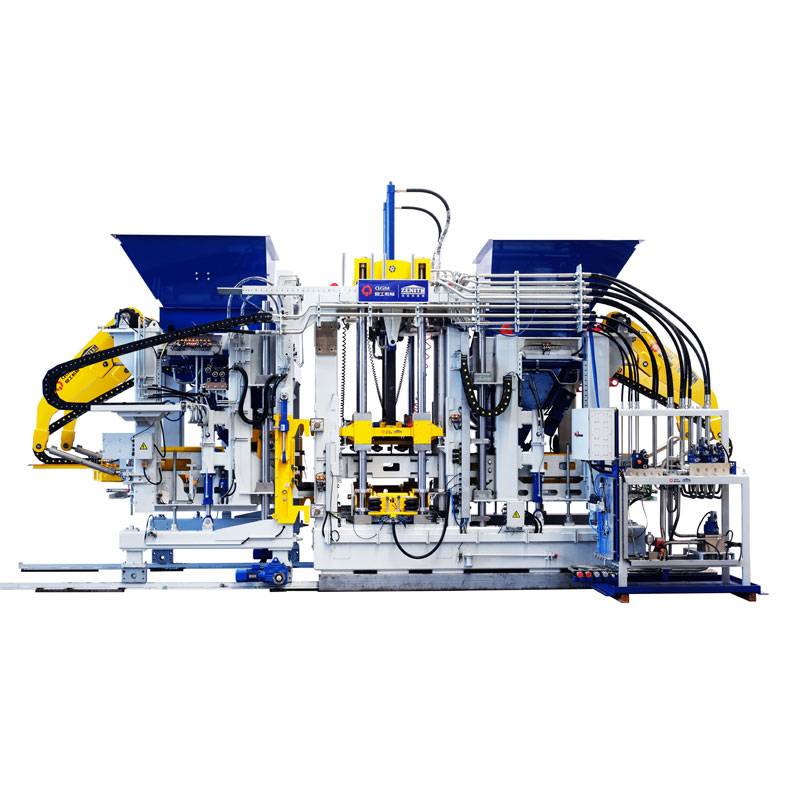
1. Why Does Localized Block Production Outperform Imported Blocks?
The cost of imported blocks includes the factory price, the packaging, the inland transport to the port, the ocean freight, the port handling, the inland transport to the project site, and the customs duties. The breakage rate during handling and transport is 5 to 10 percent. The lead time is 60 to 90 days. Localized production eliminates the ocean freight and the port handling. The raw materials are sourced locally. The lead time is reduced to the equipment installation and commissioning period, which is 60 to 90 days. The table below compares the cost structure of imported and locally produced blocks for a 120,000 cubic meter project.
| Cost component | Imported blocks | Localized production (QGM) |
| Block factory price | $3,600,000 | N/A (raw material only) |
| Raw material (cement, sand, aggregate) | Included in factory price | $1,800,000 |
| Packaging and inland transport to port | $280,000 | None |
| Ocean freight and port handling | $1,200,000 | None |
| Inland transport to site | $420,000 | $180,000 (local delivery) |
| Breakage and waste (8%) | $400,000 | $90,000 (3%) |
| Equipment investment | None | $850,000 |
| Total cost | $5,900,000 | $2,920,000 |
In our factory, we manufacture QGM Block Making Machine units for international projects. The equipment is designed for container shipping and on-site installation. Quangong Machinery Co., Ltd. has been supplying block making machines to overseas projects for over 15 years.
2. How Does the QGM Block Making Machine Adapt to Local Raw Materials?
The raw materials available at the project site may differ from the materials used in the factory's test laboratory. The sand may have a higher silt content. The aggregate may be crushed limestone instead of river gravel. The cement may be locally produced with a different chemical composition. The QGM Block Making Machine is designed with adjustable process parameters to accommodate these variations. The vibration frequency, the compaction pressure, and the cycle time can be adjusted to match the local material. The table below shows the adjustable parameters and their effect on block quality.
| Process parameter | Adjustment range | Effect on block quality | Typical setting for local materials |
| Vibration frequency | 40 – 60 Hz | Higher frequency for fine sand; lower for coarse aggregate | 50 Hz for local river sand |
| Compaction pressure | 100 – 150 bar | Higher pressure for higher strength; lower for more porous blocks | 130 bar for 7 MPa block |
| Cycle time | 12 – 25 seconds | Longer cycle for better compaction; shorter for higher output | 18 seconds for local mix |
| Mixer water content | 5 – 10% | Higher water for dry aggregate; lower for wet sand | 7% for local sand (silt 8%) |
| Mold release agent | Water-based or oil-based | Water-based for clean molds; oil-based for sticky mixes | Water-based for local cement |
Contractor's note: The ability to adapt to local materials is critical for overseas projects. In our experience, the QGM Block Making Machine can produce blocks that meet the project specification using local materials after a 2 to 3 day trial run. We recommend that the contractor send samples of the local sand, aggregate, and cement to our factory for a preliminary mix design before the equipment is shipped. This reduces the commissioning time on site. Quangong Machinery Co., Ltd. provides a material testing service for international customers.
3. What Support Does the Manufacturer Provide for Overseas Installation?
The installation and commissioning of a QGM Block Making Machine at an overseas site requires technical support. The manufacturer should provide four services. The first is a site layout drawing that shows the foundation, the power supply, the water supply, and the material storage areas. The second is a commissioning engineer who travels to the site to supervise the installation and the trial run. The third is a training program for the local operators and maintenance staff. The fourth is a spare parts package that covers the first 12 months of operation. The table below shows the support services and the typical timeline.
| Support service | Deliverable | Timeline | Responsibility |
| Site layout drawing | CAD drawing with utility requirements | 2 weeks after order | Manufacturer |
| Foundation supervision | Remote review of foundation photos | During foundation construction | Manufacturer + contractor |
| Installation supervision | On-site engineer for 3 – 4 weeks | After equipment arrival | Manufacturer |
| Operator training | Classroom and hands-on training | During commissioning | Manufacturer |
| Spare parts package | Wear parts and critical components | Shipped with equipment | Manufacturer |
In our factory, we provide a dedicated project manager for each international order. The project manager coordinates the shipping, the documentation, and the on-site support. Quangong Machinery Co., Ltd. has a network of service engineers in Southeast Asia, the Middle East, and Africa.
4. What Are the Long-Term Benefits of Localized Block Production?
The long-term benefits of localized block production extend beyond the initial project. The contractor can use the QGM Block Making Machine to supply blocks to other projects in the region. The machine can produce different types of blocks by changing the mold. The local production creates jobs and supports the local economy, which is often a requirement for government-funded projects. The table below shows the long-term benefits and their impact.
| Long-term benefit | Impact | Typical timeframe |
| Regional block supply | Additional revenue from block sales | After the first project |
| Product diversification | Ability to produce pavers, hollow blocks, and curbstones | With additional molds |
| Local employment | Compliance with local content requirements | During and after installation |
| Reduced carbon footprint | Lower transport emissions | Immediate |
| Equipment resale value | High residual value in the local market | After project completion |
In our factory, we have seen contractors use a single QGM Block Making Machine to supply multiple projects over a 5 to 7 year period. The machine is designed for a service life of 10 to 15 years with proper maintenance. Quangong Machinery Co., Ltd. provides a full spare parts catalog and a maintenance schedule for each machine.
Frequently Asked Questions About QGM Block Making Machines for Global Construction
Summary for International Contractors
The QGM Block Making Machine is a key trend in the global construction industry because it enables localized block production that reduces cost, shortens lead time, and adapts to local materials. The equipment eliminates the ocean freight and port handling costs of imported blocks. It can be adjusted to match the local sand, aggregate, and cement. The manufacturer provides site layout drawings, on-site commissioning, operator training, and a spare parts package. The long-term benefits include regional block supply, product diversification, and local employment. Quangong Machinery Co., Ltd. has been supplying QGM Block Making Machine units to overseas projects for over 15 years and provides full project support for international contractors.
Quangong Machinery Co., Ltd. manufactures QGM Block Making Machine units for localized production, with adjustable vibration, pressure, and cycle time for local materials. We provide material testing, site layout drawings, on-site commissioning, and spare parts packages for all of our international projects.
