

Why SiC Wafer Boats Lead in Oxidation and Diffusion Furnace?
2026-09-28
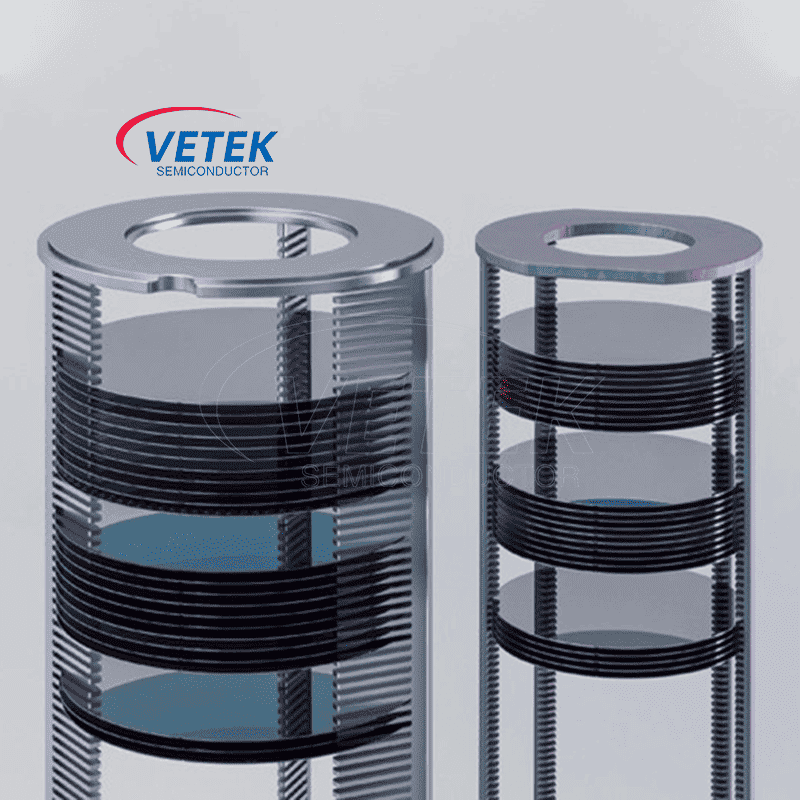
In a diffusion or oxidation furnace, the wafer boat is not a passive carrier. It is a high-temperature component that must survive thousands of thermal cycles, resist chemical attack from process gases, and avoid introducing particles or metal contamination into the wafer environment. For decades, quartz has been the default material for these boats. But as device geometries shrink and thermal budgets tighten, the limitations of quartz become more pronounced. A Silicon Carbide Ceramic Wafer Boat offers a combination of thermal stability, mechanical strength, and chemical resistance that addresses the failure modes of quartz. This guide explains why SiC boats are gaining adoption and how to evaluate them for your furnace application.
1. What Are the Failure Modes of Quartz Boats in High-Temperature Furnaces?
Quartz boats fail in three ways. The first is deformation. Quartz begins to soften at approximately 1,100°C. In a furnace running at 1,200°C, the boat can sag under its own weight and the weight of the wafers. This sagging changes the wafer spacing and can cause wafer contact, which leads to scratches and yield loss. The second is devitrification. At high temperatures, quartz transforms from a glassy state to a crystalline state. This process, called devitrification, makes the quartz brittle and prone to cracking. Devitrification is accelerated by the presence of metallic contaminants and by repeated thermal cycling. The third is particle generation. As the quartz surface devitrifies, it releases small particles that can deposit on the wafers. These particles cause defects in the gate oxide and reduce device yield. The table below summarizes the failure modes and their impact.
| Failure mode | Cause | Impact on process | Typical onset |
| Deformation (sagging) | Softening at high temperature | Wafer spacing change, scratches | 1,100°C+ |
| Devitrification | Crystallization of quartz | Brittleness, cracking, particle release | 1,000+ hours at 1,100°C |
| Particle generation | Surface degradation | Gate oxide defects, yield loss | Progressive |
| Metal contamination | Impurities in quartz | Electrical performance shift | Batch dependent |
In our factory, we have analyzed quartz boats returned from diffusion furnaces after 6 to 12 months of service. The average sag was 2 to 3 mm, and the surface showed visible devitrification. The particle count on the wafers increased by 30 to 50 percent in the last month before the boat was replaced. WuYi TianYao New Material Tech.Co.,Ltd. manufactures Silicon Carbide Ceramic Wafer Boat units that address these failure modes.
2. How Does Silicon Carbide Ceramic Wafer Boat Resist High-Temperature Degradation?
A Silicon Carbide Ceramic Wafer Boat is made from sintered alpha silicon carbide. This material has a melting point above 2,700°C and does not soften or deform at typical furnace temperatures. The thermal expansion coefficient of SiC is 4.0 x 10⁻⁶ per degree Celsius, which is lower than quartz (0.5 x 10⁻⁶) but still compatible with silicon wafers. The thermal conductivity of SiC is 120 W/mK, which is 10 times higher than quartz. This high thermal conductivity means that the boat heats and cools more uniformly, which reduces thermal stress and prevents wafer warping. The table below compares the properties of quartz and Silicon Carbide Ceramic Wafer Boat materials.
| Property | Quartz | Silicon Carbide Ceramic Wafer Boat |
| Maximum continuous temperature | 1,100°C | 1,600°C |
| Thermal expansion coefficient (10⁻⁶/°C) | 0.5 | 4.0 |
| Thermal conductivity (W/mK) | 1.4 | 120 |
| Flexural strength (MPa) | 50 | 400 |
| Hardness (Mohs) | 7 | 9 |
| Devitrification | Yes | No |
The high flexural strength of SiC means that the boat can be designed with thinner walls and larger slots, which improves gas flow and reduces the thermal mass. The high hardness means that the boat resists scratching and wear during wafer loading and unloading. In our factory, we have tested Silicon Carbide Ceramic Wafer Boat units through 5,000 thermal cycles from 200°C to 1,200°C with no measurable deformation.
3. What Are the Particle and Contamination Benefits of SiC Boats?
Particle generation is the most critical factor for yield in advanced diffusion processes. Quartz boats generate particles because the surface devitrifies and releases silica particles. SiC boats do not devitrify. The surface remains stable, so the particle generation rate is 10 to 100 times lower than quartz. In addition, SiC has a higher purity than quartz. The typical metal impurity level in our Silicon Carbide Ceramic Wafer Boat is below 10 parts per million for iron, copper, and nickel. This is significantly lower than the impurity level in standard quartz. The table below shows the particle performance and metal impurity levels of the two materials.
| Parameter | Quartz boat | Silicon Carbide Ceramic Wafer Boat |
| Particle generation (particles > 0.3 µm per cycle) | 50 – 200 | < 10 |
| Iron impurity (ppm) | 20 – 50 | < 5 |
| Copper impurity (ppm) | 10 – 30 | < 3 |
| Nickel impurity (ppm) | 5 – 15 | < 2 |
| Surface roughness (Ra, µm) | 0.5 – 1.0 | 0.2 – 0.4 |
VETEK manufactures Silicon Carbide Ceramic Wafer Boat units with a surface roughness of Ra 0.2 to 0.4 microns. The smooth surface reduces particle adhesion and makes cleaning more effective. We also offer a CVD SiC coating on the boat for additional purity and chemical resistance.
4. What Is the Service Life and Cost Comparison?
The service life of a Silicon Carbide Ceramic Wafer Boat is 3 to 5 times longer than a quartz boat. A quartz boat typically requires replacement after 6 to 12 months in a high-temperature diffusion furnace. A SiC boat can last 24 to 48 months under the same conditions. The purchase price of a SiC boat is 2 to 3 times higher than a quartz boat, but the cost per wafer processed is lower because of the longer life and the reduced downtime for replacement. The table below shows the cost comparison for a typical diffusion furnace application.
| Cost factor | Quartz boat | Silicon Carbide Ceramic Wafer Boat |
| Purchase price | 1.0x | 2.5x |
| Service life | 6 – 12 months | 24 – 48 months |
| Replacement frequency (per 5 years) | 5 – 10 times | 1 – 2 times |
| Downtime per replacement (hours) | 8 – 16 | 8 – 16 |
| Cost per year (relative) | 1.0x | 0.4 – 0.6x |
Economic justification: Although the upfront cost of a Silicon Carbide Ceramic Wafer Boat is higher, the cost per year is 40 to 60 percent lower than quartz because of the longer service life. The reduced downtime and lower particle generation also contribute to a lower cost of ownership.
Frequently Asked Questions About Silicon Carbide Ceramic Wafer Boats
Summary for Process Engineers
Silicon Carbide Ceramic Wafer Boat units offer significant advantages over quartz boats in oxidation and diffusion furnaces. They resist deformation and devitrification at high temperatures, generate fewer particles, and have a longer service life. Although the upfront cost is higher, the cost per wafer processed is lower because of the reduced replacement frequency and downtime. For advanced processes where yield and contamination control are critical, SiC boats are the preferred choice. WuYi TianYao New Material Tech.Co.,Ltd. has been manufacturing Silicon Carbide Ceramic Wafer Boat units for over 10 years and supplies to semiconductor fabs worldwide.
WuYi TianYao New Material Tech.Co.,Ltd. manufactures Silicon Carbide Ceramic Wafer Boat units with high purity, low particle generation, and long service life. We provide full material certificates and thermal performance data for all of our products.
