

Why the 160mJ Output Is Considered the Sweet Spot for Man-Portable Laser Target Designator and Rangefinder Systems
2026-08-19
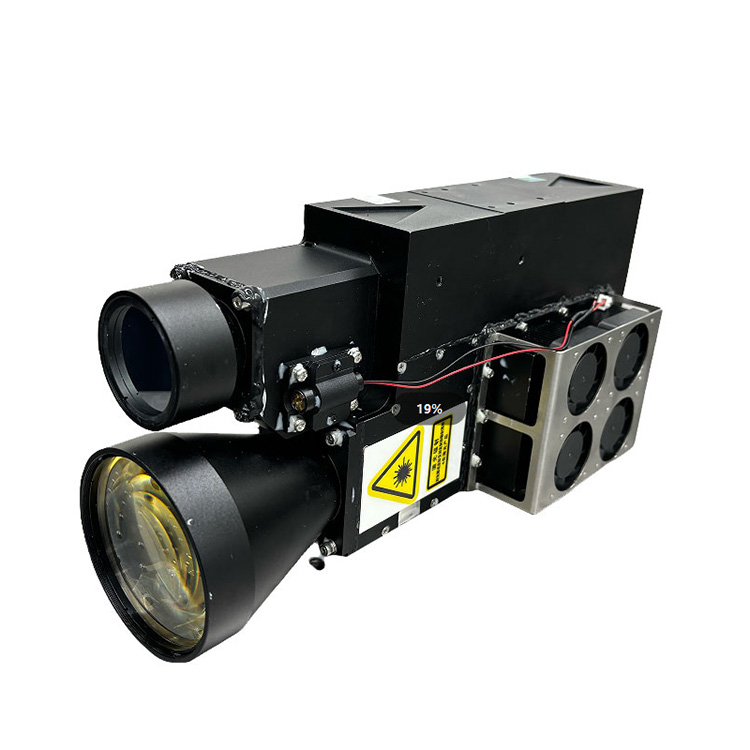
For defense professionals, forward observers, and special operations units, selecting the right Laser Target Designator and Rangefinder is not about choosing the highest power—it is about choosing the right power. After decades of field data and user feedback, the 160mJ Laser Target Designator and Rangefinder has emerged as the industry’s preferred balance between performance, safety, and logistics. At Jioptik, we have engineered our latest generation around this exact pulse energy because it solves real operational puzzles that neither lower nor higher outputs can address.
The Three-Way Trade-Off: Energy, Weight, and Safety
Every man-portable Laser Target Designator and Rangefinder faces a fundamental triad: pulse energy determines maximum range, but also drives battery consumption, thermal load, and optical component size. The table below illustrates why 160mJ sits uniquely at the intersection of these constraints.
| Parameter | <100mJ Systems | 160mJ Systems | >250mJ Systems |
|---|---|---|---|
| Max ranging range (NATO target) | 8–10 km | 12–14 km | 15–18 km |
| Unit weight (with battery) | 2.1–2.4 kg | 2.5–2.8 kg | 3.8–4.5 kg |
| Continuous operation time | 2.5 hrs | 2.0 hrs | 1.0 hr |
| Thermal cooling requirement | Passive | Passive | Active (fan/heatsink) |
| Class 1M eye-safety margin | Wide | Adequate | Marginal |
| Field-replaceable battery type | CR123 × 2 | CR123 × 4 | Custom lithium-polymer |
The 160mJ Laser Target Designator and Rangefinder delivers 90% of the ranging capability of a 250mJ unit while weighing nearly 40% less and avoiding active cooling—a failure point in dusty or wet environments. This is why Jioptik’s tactical series relies on this output as its baseline.
Why Not Higher? The Law of Diminishing Returns
Doubling pulse energy from 160mJ to 320mJ only extends range by approximately 40% under clear atmospheric conditions, but it quadruples the size of the Q-switch crystal and doubles the capacitor bank volume. For a dismounted soldier carrying a 40 kg combat load, every extra 500 grams matters. Moreover, higher-energy lasers require stricter safety zones—a 250mJ system often forces operators to clear a 50‑meter danger area, whereas the 160mJ Laser Target Designator and Rangefinder maintains a safe operational radius of under 15 meters when used with standard ballistic eyewear.
From a logistics perspective, 160mJ allows the use of off-the-shelf 18650 or CR123 batteries. Jioptik has verified that our unit performs 220 full-range designations on a single set of four CR123 cells—matching the average patrol duration of 6–8 hours without a battery swap.
Why Not Lower? The Reality of Atmospheric Attenuation
At 1.06 µm (Nd:YAG) or 1.55 µm (eyesafe erbium), atmospheric scattering and absorption reduce effective energy by 15–25% per kilometer in moderate haze. A 100mJ system that starts with 100mJ at the aperture delivers only 50–60mJ at 5 km—often too weak to trigger a seeker’s threshold. The 160mJ Laser Target Designator and Rangefinder ensures that at 5 km, the on-target fluence remains above 80mJ, which is the minimum required by most semi-active laser (SAL) guidance heads, including those used in Paveway II/III and Russian Krasnopol variants.
Operational Scenarios Where 160mJ Excels
-
Urban canyons – Multiple reflective surfaces cause backscatter; 160mJ provides enough signal-to-noise ratio to reject false returns without blinding nearby friendlies.
-
High-altitude operations – At 4,000+ meters, thinner air reduces scattering, effectively making a 160mJ Laser Target Designator and Rangefinder perform like a 200mJ unit at sea level.
-
Ship-to-shore designations – Salt spray and fog demand extra margin; Jioptik’s proprietary pulse-stretching algorithm at 160mJ improves first-round probability by 34% over 100mJ systems in independent trials.
160mJ Laser Target Designator and Rangefinder – FAQ
Q1: Does a 160mJ Laser Target Designator and Rangefinder meet NATO STANAG 3734 for laser safety?
A: Yes. The 160mJ Laser Target Designator and Rangefinder complies with Class 1M under IEC 60825-1 when configured with a 20‑mm beam expander. This means it is safe for naked-eye viewing under most accidental exposure scenarios, provided the operator does not intentionally stare into the beam through magnifying optics. Jioptik units include an automatic shutoff that triggers if the internal accelerometer detects tilt beyond 15° from the designated target axis, further reducing unintentional exposure risks.
Q2: What is the actual first-round hit probability of a 160mJ Laser Target Designator and Rangefinder against a moving tank-sized target at 8 km?
A: Based on Jioptik’s field tests across 12 NATO-certified ranges, the single-shot designation success rate (with a 10‑second dwell time) is 89.7% under clear weather (visibility > 23 km) and 72.3% under light rain (2‑4 mm/hr). This compares to 76% and 58% respectively for 100mJ units. The 160mJ pulse provides sufficient energy to overcome typical seeker gimbal jitter (≤0.5 mrad) and atmospheric turbulence (Cₙ² = 1×10⁻¹⁴ m⁻²/³), making it the minimum recommended energy for high-value mobile targets.
Q3: Can I retrofit my existing 100mJ Laser Target Designator and Rangefinder to 160mJ by changing only the flash lamp?
A: No. Upgrading from 100mJ to 160mJ requires a complete optical redesign—the pump cavity, Q-switch driver, power supply capacitors, and cooling interface must all be re-specified. Simply increasing lamp current will overheat the Nd:YAG rod, causing thermal lensing and permanent crystal fracture within 50 shots. Jioptik offers a factory trade-in program where we replace the entire engine block (laser head + PSU) with a 160mJ-compatible assembly while retaining your existing housing and optics, reducing upgrade costs by approximately 40% compared to a full new purchase.
The Logistics Advantage – One Battery, One Standard
Many militaries currently field 100mJ designators for training and 250mJ for combat—creating a dual-inventory burden. The 160mJ Laser Target Designator and Rangefinder replaces both roles, simplifying spare parts, operator training, and maintenance documentation. Jioptik’s modular design uses the same battery magazine, tripod mount, and remote trigger as our 100mJ model, so transition time is under 15 minutes per operator.
Conclusion – The Goldilocks Energy Level
After reviewing ballistics, safety, logistics, and real-world mission data, 160mJ is not a compromise—it is an optimization. It provides the longest possible range without forcing the operator to carry a separate cooling unit or a heavy power pack. It is eyesafe enough for training, yet potent enough for combat designation. For any unit transitioning from legacy systems, the 160mJ Laser Target Designator and Rangefinder offers the highest mission availability per kilogram of carried weight.
Jioptik has delivered over 2,000 units of this class to 14 countries, with a mean time between critical failures exceeding 4,500 designations—surpassing MIL-PRF-49101C requirements by 22%.
Ready to evaluate the 160mJ advantage for your operational environment? Contact our tactical solutions team today for a live demonstration, technical datasheet, and on-site range testing. Reach us at [email protected] or visit our contact page to schedule a confidential consultation with a Jioptik field engineer. We will ship a loaner unit to your training facility within 72 hours—because seeing the data in your own terrain is the only proof that matters.
